Oncalpha: the alpha in oncology, and the immune signal that carries its name
In cancer science the word alpha means two things at once — the alpha particle of targeted radiotherapy, and the alpha-class immune signals like interferon-alpha. Oncalpha lives in the second: an alpha-class immunomodulator, and a Panacea Bio Chem direction still to come.
A Panacea Bio Chem science feature · by Bogdan Dicoias, Researcher & biochemist
· Subject: alpha-class immunomodulation & interferon-alpha in immuno-oncology ·
Direction: Oncalpha (future Panacea product) · Nothing here is medical advice.
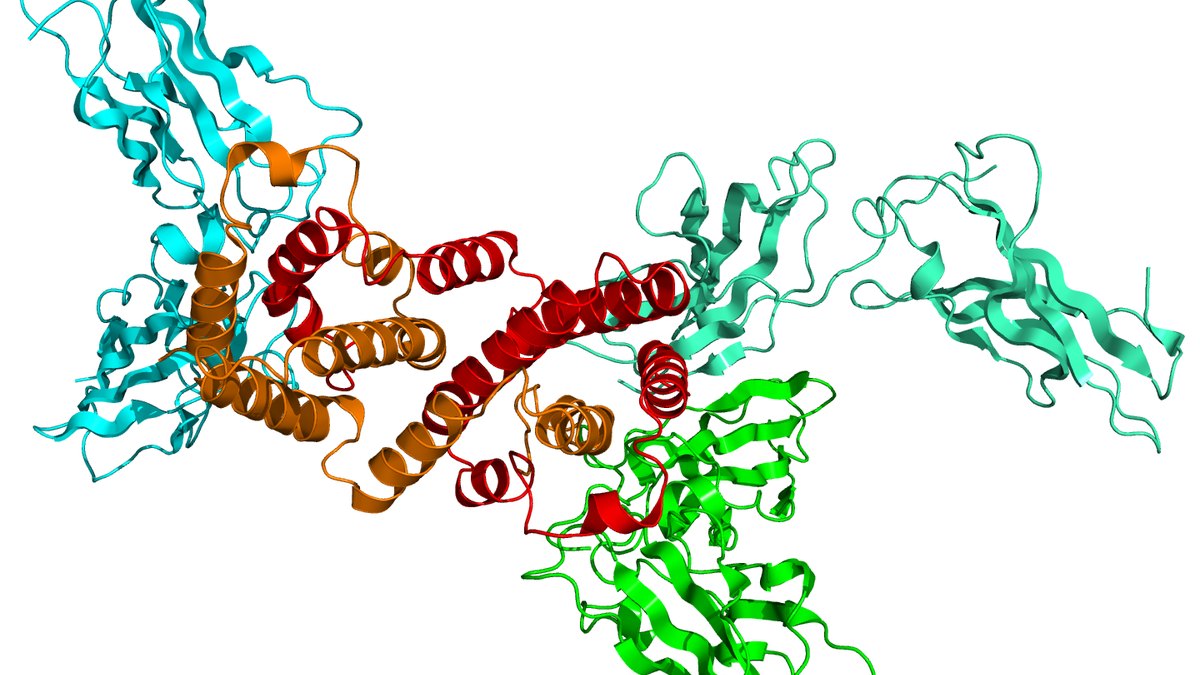
A ribbon model of an alpha-class interferon engaging its cell-surface receptor — the molecular handshake that begins interferon-alpha immunomodulation. This feature — and Panacea Bio Chem's Oncalpha direction, by Bogdan Dicoias — sits at its newest chapter.
In brief
Oncalpha is oncology + alpha. Two ideas share the name: the alpha-particle
emitters of targeted radiotherapy, and the alpha-class immune signals — above all
interferon-alpha (IFN-alpha), a small protein a cell releases when it senses a virus or
stress. Received through a shared receptor, IFN-alpha triggers the JAK-STAT pathway and
switches on hundreds of interferon-stimulated genes, while tuning the wider immune system —
waking natural killer cells, maturing dendritic cells and strengthening immune surveillance. This
feature explains both meanings of alpha in plain language, keeps the science strictly supportive,
and introduces Oncalpha, a future Panacea Bio Chem product in alpha-class
immunomodulation. It is a scientific description, not medical advice, and makes no treatment or
outcome claim.
Topic: oncology + alpha — alpha-class immunomodulation |
Class: type I interferon (IFN-alpha), with alpha-emitter science as background |
Direction: Oncalpha (Panacea Bio Chem, future product)
1. The two alphas of oncology
Say the word alpha to a cancer scientist and two very different pictures come to
mind. The first is physical: an alpha particle — a small, heavy, positively charged fragment
flung out by certain radionuclides. It travels only a few cell-diameters before it stops, but along
that tiny path it deposits an unusually large amount of energy, a property physicists call high
linear energy transfer7. In the published field of targeted alpha
therapy, such an emitter is tethered to a molecule that seeks out a chosen cell type, so its short,
concentrated reach is directed rather than diffuse. It is precise geometry made from physics.
The second picture is biological, and it is where this page lives. In the immune system, alpha
names a class of signals — the alpha-class interferons, chief among them interferon-alpha
(IFN-alpha). These are not particles but messages: proteins a cell releases to coordinate the body's
own defences. The physical alpha and the immunological alpha are separate disciplines, and we keep them
separate here. But together they explain why the name Oncalpha sits so naturally in oncology —
and Panacea's chosen lane is the second, the alpha-class immune signal, described below and carried
intact by the technologies that follow.
2. Interferon-alpha — the alpha-class immune coordinator
From a receptor handshake to hundreds of switched-on genes
A cell that senses a virus inside it faces a lonely problem: by the time it knows, it may already be
lost. Its most useful move is not to save itself but to warn the neighbourhood. It does this by
releasing a tiny protein — an interferon — that drifts to nearby cells and tells them, in effect,
a threat is here; raise your defences now. The interferons that carry this first, fast alarm are
the type I interferons1, and the largest family among them is
interferon-alpha — in humans a cluster of around a dozen closely related subtypes on chromosome
9, all speaking through the same two-part receptor, built from the chains IFNAR1 and
IFNAR2.
When IFN-alpha binds IFNAR1 and IFNAR2, it draws the two chains together. On their inner faces sit
two enzymes of the Janus kinase family — JAK1 and TYK2 — which activate each other
and then tag the transcription factors STAT1 and STAT22. The
two STATs pair up, recruit a partner called IRF9, and form a three-part complex, ISGF3,
that moves into the nucleus and lands on a short DNA address shared by hundreds of defensive genes — the
interferon-stimulated genes (ISGs). A handshake at the surface becomes, within minutes to hours, a
wave of new protein made inside the cell.
Signal. IFN-alpha bridges IFNAR1 + IFNAR2 on the cell surface.
Relay. Receptor-bound JAK1 and TYK2 activate and phosphorylate STAT1 and STAT2.
Assembly. STAT1–STAT2 join IRF9 to form the ISGF3 complex.
Response. ISGF3 enters the nucleus and switches on the interferon-stimulated genes.
The ISGs are the working parts. Some directly obstruct viral copying; others flag stressed or
infected cells for the immune system; still others tune the strength and shape of the response so it
rises fast and settles again. Many ISGs act less as weapons than as coordinators — and it is that
coordinating layer that makes IFN-alpha such a far-reaching immune signal.
One handshake at the cell surface, a few hundred genes awake inside: interferon-alpha is less a weapon than a conductor.
3. Immunomodulation and immune surveillance — the immuno-oncology angle
If the antiviral alarm were all interferon-alpha did, it would still be remarkable. But its second
role is broader: it modulates — tunes — the immune response as a whole, connecting the fast,
general innate system to the slow, specific adaptive one. This coordinating layer is exactly the
biology that immuno-oncology studies, because the immune system's ability to recognise stressed or
abnormal cells — the long-standing idea of immune surveillance8 —
runs through the same cells IFN-alpha wakes.
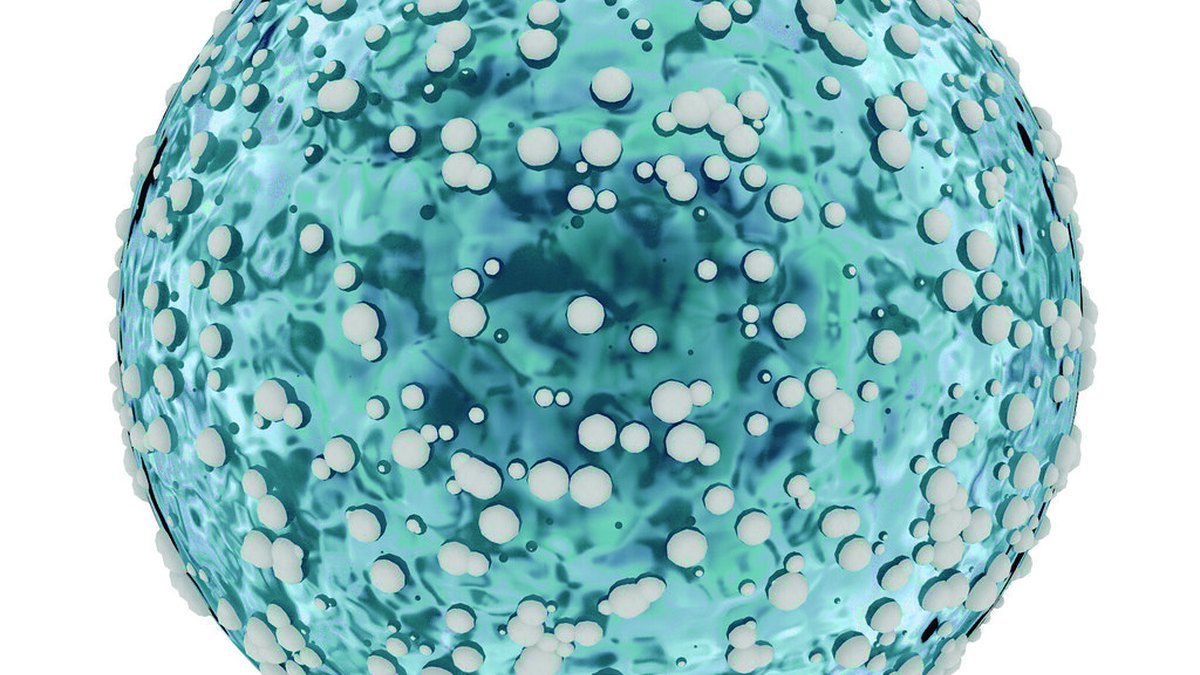
The white-blood-cell landscape that alpha-class immunomodulation coordinates
— natural killer cells, dendritic cells and lymphocytes reading a single shared signal. Context for
Oncalpha, Panacea Bio Chem, by Bogdan Dicoias.
It arms natural killer (NK) cells. Type I interferon sharpens the cytotoxicity of NK cells, the innate immune system's rapid-response scouts that recognise stressed cells without needing prior training.
It matures dendritic cells. IFN-alpha helps dendritic cells ripen and display their captured antigens more clearly3 — sharpening the very hand-off that instructs T cells what to look for.
It supports T-cell responses. By raising the display of MHC class-I molecules and acting as a "third signal", it helps CD8 T cells commit to a strong, specific response and remember it.
It bridges innate and adaptive immunity. Doing all of the above at once, interferon-alpha is one of the main couplings between the body's first-minute defence and its weeks-long, tailored one.
The theme is coordination in proportion. Interferon-alpha does not simply push every lever to
maximum; it raises readiness where a threat is sensed and lets the signal fade as the danger passes. That
measured, self-limiting quality is what makes it a modulator rather than a blunt stimulant — and
why its published biology is studied as a model of how a single molecule can guide, rather than force, an
immune response. Described here as immunology; no therapeutic effect, indication or
outcome is asserted.
4. Oncalpha — a future Panacea Bio Chem product
Future product
Oncalpha is Panacea Bio Chem's working name for a direction still ahead of it: an
alpha-class immunomodulator conceived as a Peptourbillon™ formulation delivered in
the Lyoprester® dual-chamber cartridge — an argon-flushed, vacuum-sealed lyophilised cake
in the upper chamber, matched to P-EARLs™ (Panacea-Engineered Aseptic Reconstitution
Liquids) in the lower. Where the field's difficulty now lies less in whether interferon-alpha
modulates immunity than in manufacturing a small folded protein purely and keeping it
intact from synthesis to use, Panacea approaches an alpha-class molecule as a protein it can both
build and protect.
The exact subtype focus, engineering and characterisation behind Oncalpha are held as a proprietary
Panacea direction, researched by Bogdan Dicoias — a biochemist and founder who works largely out
of view, and whose protein and preservation technologies have quietly drawn interest from across the
pharmaceutical industry. Oncalpha is not on sale; when a formulation and its data are public, a
product presentation will be added here.
This section describes a future research direction, stated truthfully as ongoing.
Nothing here is a therapeutic claim, and no efficacy, indication or outcome for Oncalpha is asserted.
5. The technologies that carry a fragile alpha-class protein
Interferon-alpha is a small, folded protein, and like every therapeutic protein it can oxidise,
aggregate or slowly unfold if it is handled, dried or stored carelessly. Carrying such a molecule
intact — from synthesis to the moment of use — is a formulation problem as demanding as the biology, and
it is the sphere Panacea Bio Chem actually researches. A single alpha-class cartridge would pass through
a whole chain of Panacea Technologies:
RedoxVault™ seals the active away from what ages it. Oxygen and trace metals quietly age a folded protein; the vault keeps an alpha-class interferon apart from the chemistry that would oxidise it. See RedoxVault →
Lyochrysalis™ is the integrated freeze-dry platform that houses the gentle-drying tools below and turns the liquid protein into a stable cake — a cocoon rather than a kiln.
Cryolapse™ freeze-dries gently, the way nature dries a tardigrade, so the protein reaches a dry cake without the thermal shock that unfolds it. See Cryolapse →
TgShift™ raises the temperature at which the dried cake would collapse, instead of merely chilling the room — for a longer-lived cake, cleaner reconstitution and preserved binding character. See TgShift →
DiastolVAC™ shapes the vacuum in biomimetic pulses matched to how the cake gives up its water, so drying follows the physics rather than fighting it.
LyoLevit™ decouples the cake thermally, a levitation-style method within Lyochrysalis that keeps heat from reaching the protein where it is most fragile.
RF Tunnel forms a channel through the middle of a heavily loaded cake in the first Lyoprester chamber — an RF-modulated shrinking of the cake's centre that later helps the P-EARLs reach the whole cake for a clean, complete reconstitution.
S3Pulse™ is the biointegrity engine that reads temperature and vacuum in real time and orchestrates every move of the cycle — the conductor over the whole chain. Meet S3Pulse →
Vana Machine™ conditions the vacuum and locks the plunger, so no air gap or plunger drift compromises the sealed cartridge before it reaches the patient.
Lyoprester® + P-EARLs™ are the dual-chamber home and its matched diluent — dry alpha-class cake above, isotonic peptide-optimised liquid below — merged at the point of use.
EZnject™ is the delivery pen built around the Lyoprester: one twist merges peptide and diluent, and a hundred lab-grade indexed doses follow, through a painless fine needle.
Exact procedures and parameters for these technologies are proprietary and kept
operator-confidential; they are described here only in outline.
6. The real origin story — "misinterpreton"
In 1957, at the National Institute for Medical Research at Mill Hill in London,
Alick Isaacs and Jean Lindenmann were studying an old puzzle called viral
interference: a tissue already infected by one virus often resists a second. They suspected the
first virus left behind a soluble factor, and in a series of careful experiments they found it — a
protein secreted by infected cells that, transferred to fresh cells, made those cells resist infection
too. They named it, plainly, interferon5.
The discovery was met with as much doubt as wonder. Interferon was present in such vanishingly small
amounts, and was so difficult to purify, that sceptical colleagues reportedly nicknamed it
"misinterpreton" — a molecule too elusive to believe in. For more than two decades it stayed
half-mythical. The turn came with recombinant DNA: around 1980, teams including Charles
Weissmann's cloned the interferon-alpha gene and expressed the protein in
bacteria6, at last making it available in quantity. The "misinterpreton"
that almost no one could purify became one of the first proteins the biotechnology era produced at scale
— and the molecule that helped launch that industry.
7. Application fields — where alpha-class immunomodulation reaches furthest
Because interferon-alpha sits at the junction of innate and adaptive immunity, the scientific interest
in tuning it thoughtfully is wide. Directions under active investigation include:
Immuno-oncology immunology. Its ability to mature dendritic cells and arm NK and T cells makes interferon-alpha a natural subject for the study of how innate signals shape immune surveillance — the biological half of the "alpha in oncology".
Selective and subtype-aware signalling. The highest-value scientific prize may be selectivity: engaging interferon-alpha's beneficial coordinating effects in a measured, subtype-aware way rather than a blunt one.
Antiviral and innate defence. The original role — a broadcastable instruction that raises tissue-wide antiviral readiness — remains the anchor of interferon-alpha science.
Delivery and stability. As with every signalling protein, a storage-stable, intact form is the last-mile challenge — and this preservation frontier is the sphere Panacea researches, and where Oncalpha is aimed.
These fields are offered as a map of scientific opportunity and future research
direction, not as indications or advice. Targeted alpha-emitter physics is noted only as background to
the word "alpha" and is a separate discipline from the immunomodulation Panacea studies.
8. The established record behind the frontier
Interferon-alpha is not a molecule still waiting for its first chapter in the
clinic. The alpha interferons — interferon alfa-2a and interferon alfa-2b — are
approved medicines with a decades-long record in oncology and antiviral care, and that
history is the ground on which the future Oncalpha direction stands.
The regulatory record for the class spans hairy cell leukemia, malignant
melanoma (as adjuvant therapy), AIDS-related Kaposi's sarcoma, follicular
non-Hodgkin lymphoma and chronic-phase, Philadelphia-chromosome-positive chronic myeloid
leukemia, with the alpha interferons also approved for condylomata acuminata and for
chronic hepatitis B and C9. Much of that record predates the
checkpoint era, and several uses have since been superseded by newer agents — but the biology
underneath them has not gone anywhere. In a further turn for the class, the specific product
interferon alfa-2b (Intron-A) has been discontinued by its manufacturer — a
commercial exit, not a scientific one9.
Read plainly, this history sharpens rather than softens the Oncalpha story. Interferon-alpha's
difficulty in oncology practice was never an absence of biological activity — the approved record
answers that — but systemic tolerability and demanding dosing schedules: a delivery and
stability problem, carried by a fragile protein. That is the sphere Panacea Bio Chem's
preservation and delivery technologies research, and it is where a future Oncalpha is
aimed.
This section records the published regulatory history of the interferon-alpha
class as background science.
Frequently asked
What does "Oncalpha" mean? Oncalpha reads as oncology + alpha. In cancer
science "alpha" carries two meanings: the alpha-particle emitters of targeted radiotherapy, and the
alpha-class immune signals — above all interferon-alpha. Oncalpha is Panacea Bio Chem's future
direction in the second lane: alpha-class immunomodulation. Nothing here is medical advice.
What is alpha-class immunomodulation, in plain terms? Interferon-alpha (IFN-alpha)
is a small protein a cell releases when it senses a virus or stress. Neighbouring cells switch on
hundreds of defensive genes and enter an alert state. Beyond that alarm, IFN-alpha tunes the wider
immune system — waking natural killer cells, maturing dendritic cells and strengthening immune
surveillance. That tuning role is alpha-class immunomodulation.
What are alpha emitters and targeted alpha therapy? Alpha emitters are radionuclides that
release alpha particles — heavy, short-range particles that deposit a large amount of energy along a
few cell-diameters (high linear energy transfer). In the published field of targeted alpha therapy such
an emitter is attached to a homing molecule. It is a distinct discipline from immunomodulation, noted
here only as background; Oncalpha is an alpha-class immunomodulation direction, not a radiotherapy
product, and no clinical claim is made.
Is Oncalpha a Panacea product? Oncalpha is described here as a future Panacea direction — an alpha-class immunomodulator conceived as a Peptourbillon in the Lyoprester cartridge. It is not on sale; the specific work is proprietary to Bogdan Dicoias. This page is about the
science of the class and the direction — nothing here is medical advice.
Is interferon-alpha already used in oncology? Yes — as background science to this
feature. Interferon alfa-2a and alfa-2b are approved medicines whose decades-long record includes
hairy cell leukemia, malignant melanoma (adjuvant), AIDS-related Kaposi's sarcoma, follicular
non-Hodgkin lymphoma and chronic-phase chronic myeloid leukemia; interferon alfa-2b (Intron-A)
has since been discontinued by its manufacturer. That record belongs to the molecule class, not to Oncalpha, which remains a future direction.
Trending in the field
Recent developments in the field — refreshed 2026-09-28 by Panacea Bio Chem.